
Benzo Detox in Fond du Lac, Wisconsin
Benzodiazepine detox is a crucial step toward recovery for individuals struggling with benzodiazepine addiction. According to the Substance Abuse and Mental Health Services Administration (SAMHSA), benzodiazepine misuse affects millions of Americans each year, underscoring the need for effective, medically supervised treatment.
Wisconsin Recovery Institute offers an intensive benzodiazepine detox program in Wisconsin, specifically designed to address the unique challenges associated with benzodiazepine withdrawal. By understanding what benzodiazepine detox entails, what to expect during the process, and the potential dangers of withdrawal, individuals can make informed decisions about their recovery journey.
Benzodiazepines, also known as benzos, are a type of prescription medicationzcommonly used to treat anxiety, insomnia, and seizures. They work by enhancing the effect of a neurotransmitter called gamma-aminobutyric acid (GABA) in the brain, which helps to calm the body and mind. Benzodiazepines are highly effective in providing relief from these conditions.
However, benzos also carry a high risk for addiction. The addictive potential of these drugs was first recognized in the 1970s, when reports of dependence and withdrawal symptoms began to surface. Even with this knowledge, benzodiazepine drugs continue to be widely prescribed and can be obtained through illegal means. For individuals struggling with dependence, prescription drug addiction treatment can provide the medical support, structure, and therapy needed to safely address benzo misuse and begin recovery.
One of the main reasons for benzodiazepine addiction is their ability to produce a feeling of relaxation and euphoria, making them desirable for recreational use. Many individuals who are prescribed benzodiazepines for medical reasons may unintentionally become addicted due to long-term use. Patients with chronic anxiety or sleep disorders may rely on these medications for extended periods without proper monitoring. This can lead to physical dependence and difficulty discontinuing the drug without experiencing severe withdrawal symptoms.
Benzodiazepine addiction can affect not only physical health but also has significant impacts on mental health and overall well-being. Long-term use of these drugs can result in memory loss, cognitive impairment, depression, and even suicidal thoughts.
Benzodiazepine Dependence vs. Addiction
It’s important to understand that not everyone who needs benzo detox became dependent through misuse. Physical dependence means the body has adapted to the presence of the medication and reacts when it is reduced or stopped, and this can happen even when prescription medications are taken exactly as directed.
Many patients became increasingly reliant on benzodiazepines after long-term treatment for anxiety, insomnia, panic disorder, or seizure conditions, without any intention of misuse. Addiction, by contrast, typically involves compulsive use, loss of control, and continued benzo use despite harm. Both physical dependence and addiction can make stopping benzodiazepines difficult and potentially dangerous without professional support.
What is Benzodiazepine Detox?
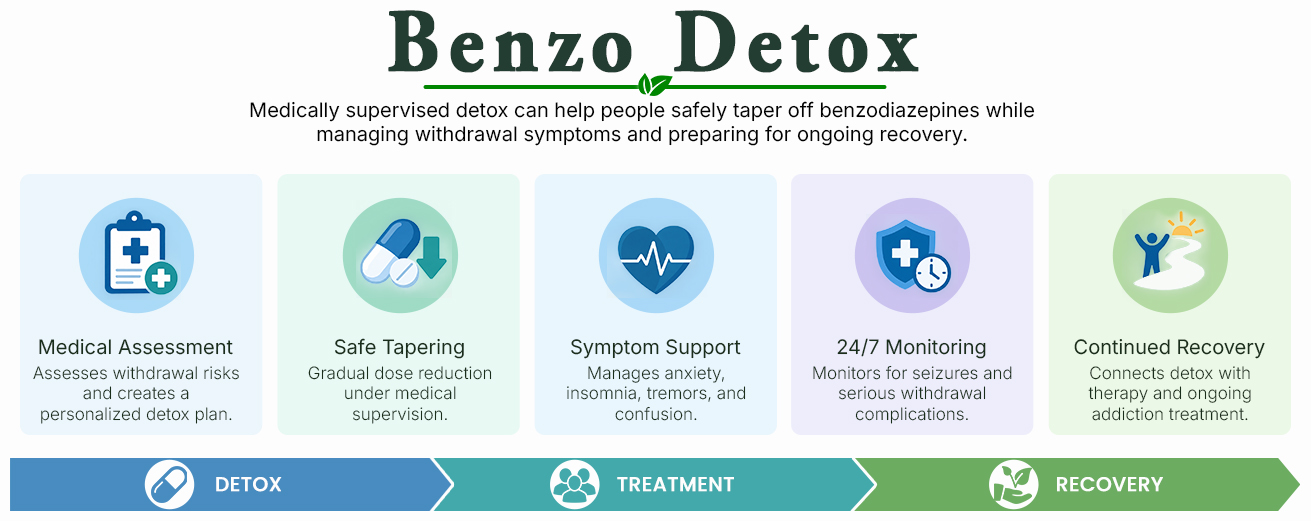
Benzodiazepine detox is a medically supervised process that focuses on safely removing benzodiazepines from the body while managing the physical and psychological symptoms of withdrawal. The detoxification process is designed to help individuals safely taper off benzodiazepines and manage withdrawal symptoms effectively.
During benzodiazepine detox, individuals may experience a range of withdrawal symptoms, including anxiety, insomnia, tremors, and in severe cases, seizures. These symptoms can be challenging to manage without support, which is why medical supervision is crucial during the detox process. Healthcare professionals may use medications to help alleviate withdrawal symptoms and ensure the safety and comfort of the individual undergoing detox.
It is important for individuals undergoing benzo detox in Wisconsin to have a supportive environment and access to mental health resources. The psychological effects of benzodiazepine withdrawal can be significant, leading to mood swings, depression, and intense cravings. Addiction therapy in Wisconsin can play a vital role in addressing these psychological symptoms and helping individuals develop coping strategies for long-term sobriety.
What to Expect During Benzodiazepine Detox
The process for detox in Wisconsin typically begins with a thorough assessment to determine the appropriate treatment plan. Medical professionals will closely monitor vital signs, administer medications if necessary, and provide emotional support throughout the detoxification journey.
Detoxification is a unique experience for each person, with withdrawal symptoms varying in severity and duration. These symptoms may include anxiety, insomnia, irritability, tremors, and seizures. Proper medical supervision and support can alleviate discomfort and ensure a safer detoxification process.
During benzo detox in Wisconsin, individuals may also participate in therapy sessions to address the psychological aspects of addiction and learn coping strategies for managing cravings and triggers. Group therapy for addiction offers a supportive environment for individuals to share their experiences and receive guidance from trained professionals.
Dangers of Benzodiazepine Withdrawal
Abruptly stopping the use of benzodiazepines can lead to severe withdrawal symptoms, including increased heart rate, hallucinations, and even seizures. These risks highlight the importance of seeking professional help and undergoing medically supervised benzo detox in Wisconsin.
At Wisconsin Recovery Institute in Fond du Lac, our experienced medical team understands the potential dangers of benzodiazepine withdrawal and is well-equipped to provide the necessary care and support. The priority during medically-assisted detox in Wisconsin is ensuring the safety and comfort of individuals during the detox process.
Benzodiazepine withdrawal symptoms can vary in severity. Common symptoms of benzodiazepine withdrawal include anxiety, insomnia, tremors, and confusion. These symptoms can be distressing and overwhelming, underscoring the importance of seeking professional help to navigate the challenges of detoxification safely.
Who is at Risk for Severe Withdrawal?
Individuals with a history of long-term use, high dosage, use of short-acting benzodiazepines, or co-occurring substance use are at a higher risk for severe withdrawal. Knowing these risk factors is not meant to frighten anyone; it is meant to help individuals and their loved ones make the safest possible decision about the level of care needed.
Risk factors for more severe benzo withdrawal include:
- Long-term benzodiazepine use: The longer the duration of use, the more the brain has adapted.
- High dosage: Higher doses create stronger physical dependence.
- Short-acting benzodiazepines: Short-acting benzos like Xanax or Ativan leave the body quickly.
- Polysubstance use: The use of more than one drug at the same time (such as drinking alcohol) alongside benzodiazepines affects withdrawal rates.
- A history of prior seizures or severe withdrawal episodes: Particular medical history can drastically affect withdrawal.
- Older age: Age can affect the rate at which the body processes and clears medication from the body.
- Co-occurring mental health conditions: Conditions like panic disorder, depression, or trauma can affect how the person reacts during the withdrawal process.
Benzodiazepine Withdrawal Symptoms
Benzodiazepine withdrawal symptoms can vary depending on several factors, including the duration and dosage of benzodiazepine use, individual physiology, and mental health. Benzodiazepines are a class of medications commonly prescribed to treat anxiety, insomnia, and other conditions. When individuals abruptly stop or reduce their benzodiazepine intake after prolonged use, they may experience a range of withdrawal symptoms.
Common withdrawal symptoms may include:
- Anxiety and panic attacks
- Insomnia and sleep disturbances
- Irritability and mood swings
- Tremors and muscle spasms
- Headaches and dizziness
Individuals going through benzodiazepine withdrawal may also experience heightened sensitivity to light, sound, and touch, as well as gastrointestinal issues such as nausea and vomiting. Seeking professional medical guidance and support is essential to ensure a safe and effective tapering process.
In more serious cases, benzodiazepine withdrawal can produce symptoms that require immediate medical attention. Severe symptoms may include:
- Hallucinations
- Severe confusion
- Psychosis
- High fever
- Seizures
These complications are more likely after long-term or high-dose benzo use, or when someone stops abruptly without medical supervision.
One of the most confusing parts of benzo withdrawal is the experience of rebound symptoms, particularly rebound anxiety and rebound insomnia. These occur when the original symptoms that led to benzo use return in a heightened form after the medication is stopped. Rebound anxiety can feel more intense than the anxiety experienced before starting benzos, and rebound insomnia can make sleep feel impossible.
Rebound symptoms are not proof that an individual will always feel this way or that the medication is still needed. They are a temporary part of the withdrawal process. With proper psychological support, evidence-based strategies, and compassionate care, these symptoms can be managed and improve over time.
Benzodiazepine Detox Timeline
The duration of benzo detox in Wisconsin can vary from person to person. Typically, benzodiazepine detox can be completed within a few weeks, but in some cases, it may take longer. Factors such as the specific benzodiazepine used, dosage, and duration of use all play a role in determining the detox timeline.
The support system during benzodiazepine detox plays a significant role in the individual’s recovery journey. Wisconsin Recovery Institute in Fond du Lac provides a comprehensive approach that includes therapy, counseling, and support groups to address not only the physical aspects of detox but also the emotional and mental well-being of clients.
The table below offers a general overview of how benzo withdrawal typically unfolds. Keep in mind that timing varies significantly based on whether the medication is short-acting or long-acting, the dosage, and individual health factors.
| Phase | When Symptoms Typically Begin | Common Symptoms | Key Factors Affecting Severity
|
| Early withdrawal | Hours to 1-3 days (sooner for short-acting benzos) | Anxiety, insomnia, irritability, restlessness | Half-life of medication, dosage |
| Acute withdrawal | Days 1-7 (short-acting) or Days 3-7 (long-acting) | Tremors, sweating, nausea, panic attacks, mood swings, and possible seizures | Duration of use, polysubstance use, seizure history |
| Subacute phase | Weeks 2-4 | Lingering anxiety, sleep disturbances, and concentration difficulties | Co-occurring mental health conditions, level of support |
| Protracted withdrawal (PAWS) | Weeks to months after acute detox in some cases | Ongoing anxiety, insomnia, emotional sensitivity, cognitive fog | Long-term benzodiazepine use, individual physiology |
Some people experience protracted withdrawal, sometimes called post-acute withdrawal syndrome (PAWS), where symptoms like anxiety, sleep disruption, and difficulty concentrating persist beyond the initial detox phase. This does not mean recovery has failed. The brain is still healing, and continued treatment and psychological support can make a meaningful difference.
Call 911 or go to the nearest emergency room immediately if anyone experiences any of the following during benzo withdrawal:
- Seizures or convulsions
- Hallucinations or severe confusion
- Suicidal thoughts or self-harm
- Chest pain or difficulty breathing
- Unstable vital signs or loss of consciousness
These signs can indicate severe withdrawal and require urgent medical attention. Do not wait.
A benzodiazepine taper is a clinician-guided plan that gradually lowers the dose of benzos over time, rather than stopping abruptly. Tapering slowly allows the brain and central nervous system to adjust more gently. This can significantly reduce the severity of withdrawal symptoms and lower the risk of serious complications like seizures.
Taper schedules are highly individualized. A clinician will consider the specific medication, its half-life, the current dosage, how long a person has been using it, their medical history, and any co-occurring mental health conditions before creating a plan. Attempting a self-directed taper without medical guidance is not safe.
Inpatient vs. Outpatient Benzo Detox
One of the most important decisions in the benzo detox process is choosing the right level of care. Both inpatient and outpatient detox can be appropriate depending on the individual’s situation, and a professional assessment is the best way to determine which is safer.
| Inpatient Medical Detox | Outpatient Detox
|
|
| Level of monitoring | 24/7 medical supervision | Scheduled check-ins and appointments |
| Best suited for | High-dose or long-term benzo use, seizure risk, co-occurring disorders, polysubstance use | Lower-risk cases with strong home support and medical oversight |
| Environment | Structured, distraction-free residential setting | Individual lives at home during treatment |
| Support available | Immediate medical response, therapy, and peer support | Therapy and medical guidance during scheduled visits |
| Transition to the next level | Residential treatment, dual diagnosis care, and outpatient programs | Ongoing outpatient therapy and support groups |
For many people, especially those with a history of long-term benzodiazepine use, high dosage, short-acting benzos, or co-occurring mental health conditions, inpatient medical detox offers a safer and more supported environment. Outpatient detox may be considered for individuals with lower risk profiles and a stable, supportive home environment.
What Happens After Benzo Detox?
Completing benzo detox is a meaningful and courageous step; it is the beginning of recovery, not the end. Many people feel surprised when anxiety, sleep difficulties, or emotional sensitivity continue after the acute detox phase. This is normal, and it is exactly why ongoing treatment matters so much.
Ongoing therapy, including cognitive behavioral therapy for addiction, can help individuals build coping skills, process difficult emotions, and develop relapse prevention strategies for the long term. Many people transition to residential or outpatient treatment programs to continue the journey to recovery.
Find Freedom From Addiction at Wisconsin Recovery Institute
Navigating benzodiazepine addiction is not something anyone has to face alone, and reaching out for help is a sign of strength. Wisconsin Recovery Institute is here to support individuals and their loved ones through every stage of the recovery process, from benzo detox in Wisconsin to long-term healing. The team understands how challenging this journey can be and is committed to providing compassionate, evidence-based care.
If a loved one is struggling with benzodiazepine addiction, know that effective help is available. Contact our admissions team today to learn more about benzo detox in Wisconsin and how Wisconsin Recovery Institute can help achieve lasting recovery.

Frequently Asked Questions About Benzo Detox
Benzodiazepines slow the central nervous system by increasing GABA activity in the brain, and over time, the brain adapts to their presence. When benzo use is reduced or stopped, the central nervous system can become overstimulated, triggering withdrawal symptoms.
Yes, benzo withdrawal can cause seizures in some cases. The risk is especially high after long-term or high-dose use, or when someone stops benzo use abruptly without medical supervision.
Home detox is not safe for many patients because benzo withdrawal can become severe or unpredictable. A professional assessment helps determine whether inpatient medical detox or outpatient detox is the more appropriate option.
After detox, many people continue with therapy, dual-diagnosis treatment, residential care, or outpatient support. Ongoing treatment helps to address relapse risk, anxiety symptoms, rebound symptoms, and the broader recovery journey.
● https://www.samhsa.gov/medications-substance-use-disorders
● https://www.drugabuse.gov/drug-topics/opioids/benzodiazepines-opioids
● https://pmc.ncbi.nlm.nih.gov/articles/PMC6358464/
● https://www.samhsa.gov/newsroom/press-announcements/20250728/samhsa-releases-annual-national-survey-on-drug-use-and-health
● https://pmc.ncbi.nlm.nih.gov/articles/PMC6639084/
● https://www.samhsa.gov/data/sites/default/files/reports/rpt47098/Methodological%20Summary%20and%20Definitions/2023-nsduh-method-summary-defs.htm