Medical Detox in Wisconsin
Wisconsin Recovery Institute in Fond du Lac is distinguished by its commitment to individualized and comprehensive care, offering a range of specialized programs to address substance use disorders. Our detox process is a meticulously managed and medically supervised phase, ensuring a safe and supportive environment for individuals embarking on their recovery journey.
With a holistic approach, our programs extend beyond detox to include residential addiction treatment, dual diagnosis support, and various therapy modalities. At Wisconsin Recovery Institute in Fond du Lac, we emphasize not only detoxification but also the critical next steps, promoting sustained recovery and empowering individuals to build healthier, substance-free lives. Call us today to start your recovery journey!
Detoxification is the process of safely and systematically removing toxic substances, such as drugs or alcohol, from the body. At Wisconsin Recovery Institute, our detox program is a crucial initial phase of addiction treatment and is conducted under the supervision of medical professionals to ensure a safe and supportive environment for individuals beginning their recovery journey.
What Are Withdrawal Symptoms?
Withdrawal symptoms can vary widely depending on the substance of abuse, the duration and intensity of use, and individual factors such as overall health and genetics. At Wisconsin Recovery Institute in Fond du Lac, our experienced medical professionals are well-versed in managing withdrawal symptoms across a spectrum of substances through our alcohol detox in Wisconsin and other medically supervised detox services. Common withdrawal symptoms may include:
Opioids (e.g., heroin, prescription painkillers)
Symptoms of opioid withdrawal may involve intense cravings, nausea, vomiting, diarrhea, muscle aches, anxiety, and insomnia. Medications such as methadone or buprenorphine may be used to ease withdrawal discomfort.
Alcohol
Alcohol withdrawal symptoms associated with alcohol addiction can range from mild (tremors, anxiety) to severe (delirium tremens). Medical supervision is crucial during alcohol detox to manage potential complications such as seizures. Medications like benzodiazepines may be prescribed to reduce symptoms.
Benzodiazepines (e.g., Xanax, Valium)
Detox for benzodiazepine addiction can be challenging and may include symptoms like anxiety, insomnia, seizures, and, in severe cases, hallucinations. Tapering under medical supervision is often employed to manage withdrawal and ensure safety.
Stimulants (e.g., cocaine, methamphetamine)
Symptoms of stimulant withdrawal may involve fatigue, depression, increased appetite, and intense cravings. While there are no specific medications to address stimulant withdrawal, therapeutic interventions and support play a crucial role.
Cannabis
Detox for cannabis abuse may lead to irritability, insomnia, decreased appetite, and mood changes. Although the physical symptoms are generally milder compared to other substances, emotional support and counseling are valuable during this process.
Withdrawal symptoms are often a challenging aspect of the recovery journey, underscoring the importance of a professionally supervised detox program. At Wisconsin Recovery Institute in Fond du Lac, our alcohol detox in Wisconsin approach involves individualized care, symptom monitoring, and the use of evidence-based interventions to ensure a safe and supportive experience during this critical phase of treatment.
What Happens During the Detox Process?
The detox process at Wisconsin Recovery Institute in Fond du Lac is the first step in treatment, and our inpatient program is carefully managed to help people begin recovery safely. Detox typically lasts 5-10 days depending on individual needs.
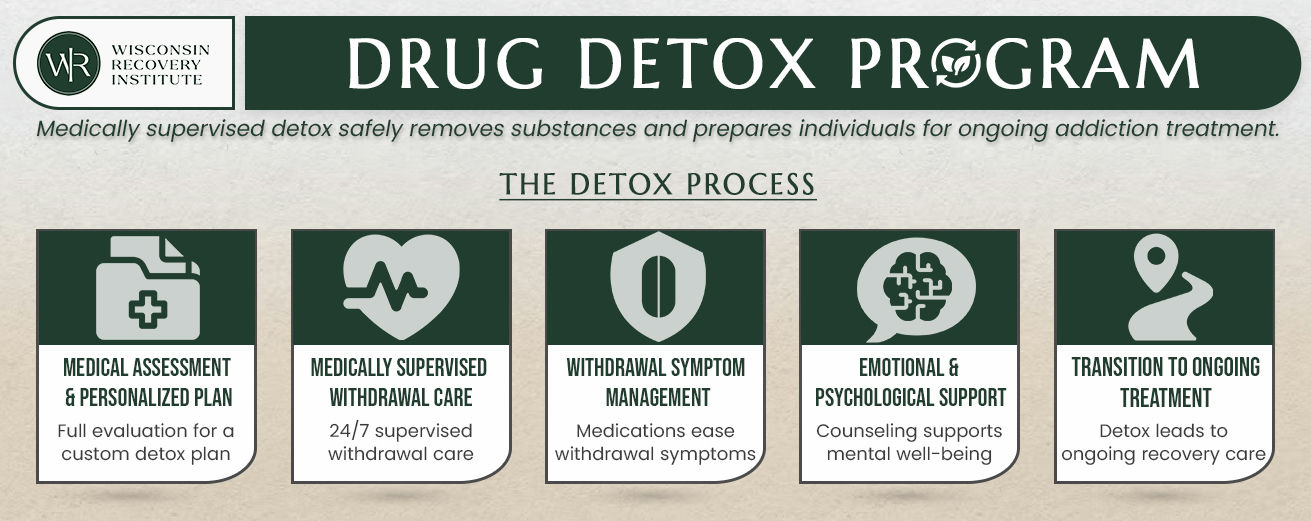
This critical stage involves several key steps, with 24-hour medical supervision throughout:
Before detox, each individual undergoes a thorough medical assessment to determine their specific needs, substance use history, and any existing medical or mental health concerns. This information guides the development of a personalized detox plan.
Our experienced medical professionals provide hospital-level supervision and closely monitor individuals throughout the detox process. This supervision is crucial for managing any potential complications or adverse reactions that may arise during withdrawal.
Inpatient detox programs help stabilize withdrawal symptoms before rehab by gradually reducing the substance of dependence. This controlled approach minimizes the intensity of withdrawal symptoms and ensures a more comfortable experience.
Medications may be prescribed to alleviate withdrawal symptoms and address any underlying medical or mental health issues. This helps individuals navigate the physical and psychological challenges associated with detoxification.
Our compassionate staff recognizes the emotional toll that detox can take, and emotional support is provided throughout the process. Individuals have access to counseling and therapeutic interventions to address the psychological aspects of addiction.
Following successful detoxification, individuals transition to the next phase of treatment, which may include residential care, therapy programs, and ongoing support. This transition is a critical step toward addressing the root causes of substance use disorder and the underlying disorder driving it, while building a foundation for sustained recovery. Detox is only the first step, and ongoing treatment supports long-term recovery.
Can I Detox From Drugs At Home?
Attempting to detox from drugs at home can be dangerous and is strongly discouraged. The withdrawal process can be unpredictable, and without proper medical supervision, there is an increased risk of complications. At our Wisconsin detox center in Fond du Lac, individuals receive care in a controlled and supportive environment that prioritizes safety and well-being throughout the detoxification process.
Throughout the Wisconsin drug detox process at Wisconsin Recovery Institute in Fond du Lac, the focus is on safety, comfort, and preparing individuals for the comprehensive treatment that follows. This individualized and holistic approach helps set the stage for a successful recovery journey.
What Happens After Detox and Addiction Treatment?
After detox, individuals transition to the next phase of treatment, which may include residential care, therapy programs, and ongoing support to help them or a loved one continue recovery. At Wisconsin Recovery Institute Fond du Lac, our Wisconsin detox program is part of a comprehensive continuum of care designed to address the root causes of addiction while providing individuals with the tools and strategies needed for sustained recovery. Post-detox treatment plans are tailored to each individual’s needs, focusing on long-term well-being and successful reintegration into daily life.

Take the First Step in Substance Use Recovery: Contact Us For Detox
Located in Fond Du Lac, WI, Wisconsin Recovery Institute treats adults struggling with substance use disorders across the Midwest. Our staff takes great care in making every client comfortable and provides individualized treatment plans to address individual issues.
At our drug and alcohol rehab, you can detox from a substance you’re misusing and immediately transition into residential treatment for addiction. We offer individual, group, and experiential therapy to help heal from trauma and build coping strategies to avoid relapse. If you’re looking for help, contact us today and someone from our team will assist you in starting your addiction recovery with us!
Frequently Asked Questions
A Wisconsin detox program typically begins with a full clinical assessment, followed by medically supervised withdrawal management and symptom support. The goal is to keep you safe and as comfortable as possible while your body adjusts.
Most detox stays last between five and ten days, though the exact timeline depends on the substance involved, the severity of dependence, and how your body responds to treatment.
Detoxing without medical supervision can be dangerous, especially from alcohol, benzodiazepines, or opioids, where withdrawal symptoms can become severe or life-threatening. A supervised setting allows medications and monitoring to be used if complications arise.
Depending on the substance, care teams may use medications such as buprenorphine or methadone for opioid withdrawal, or benzodiazepine tapers for alcohol withdrawal, always under close medical supervision.
Detox is typically the first step, not the whole treatment. Most people transition into residential or outpatient care afterward to address the behavioral and emotional sides of addiction.